ICEYE and Nokia have signed a Letter of Intent with Ukraine's Ministry of Defence to explore cooperation on sovereign satellite communications. The document is exploratory and does not bind either company to a procurement or deployment contract, and no pricing, delivery timetable or terminal volumes were disclosed alongside it.
The announcement came during a visit by Finland's Prime Minister to Ukraine. It builds on a partnership the two companies announced earlier this month to develop broadband low Earth orbit satellite communications systems for governments.
A three-layer model of ownership
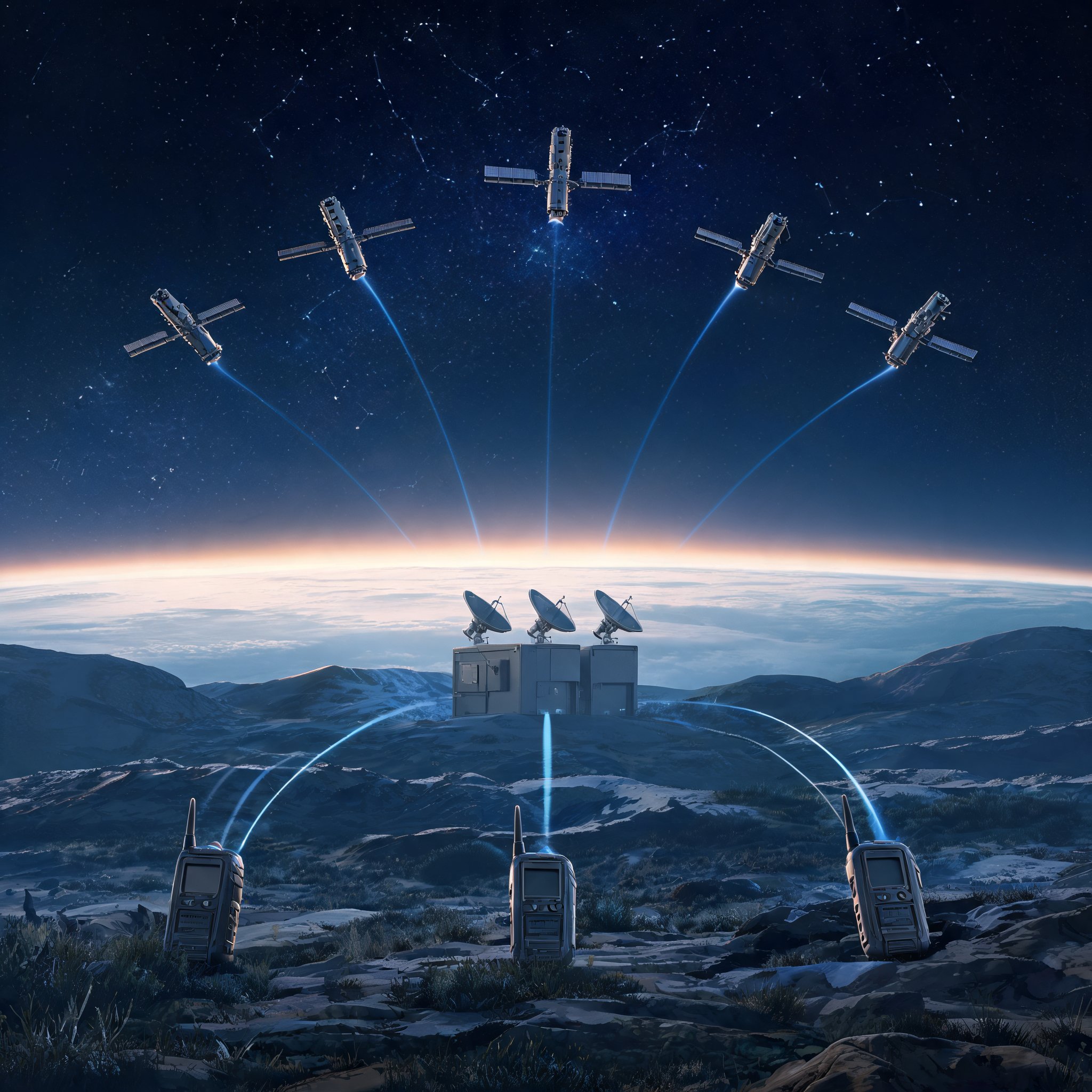
The jointly developed systems are designed to give nations ownership and control across three layers: the satellites themselves, the ground segment and the user terminals. According to the companies, that differs from buying capacity on a foreign-operated constellation, where a vendor sets continuity terms and can withdraw service under political pressure.
Both companies describe the architecture as built on trusted European technology, presented as their answer to dependence on non-European platforms. The declared mission set covers defence work and disaster response.
Kyiv frames communications as national security
Ukraine's President, Volodymyr Zelenskyy, said modern warfare had shown that reliable communications are a matter of national security, adding that countries must rely on capabilities they can control. He described the Letter of Intent between the Ministry of Defence, ICEYE and Nokia as an important step in that direction, and thanked Finland and its Prime Minister for consistent support, saying Ukraine values partners who help it and also work with it to build Europe's long-term security.
Mikko Hautala, Chief Geopolitical & Government Relations Officer and Chairman of Nokia Defense, said nations need communications they can rely on in every situation, and that satellite networks extend and protect connectivity when ground networks are disrupted, making them a key part of any secure communications system. Through the Letter of Intent, he said, the parties will explore how trusted, sovereign satellite communications can strengthen Ukraine's resilience and give it control over the connectivity it depends on.
Why low Earth orbit matters
Low Earth orbit constellations fly closer to the ground than geostationary satellites, the engineering basis for lower-latency broadband to moving units and mobile terminals. Nokia's framing points at the difference between owning a constellation and renting capacity on one: a government that holds the ground segment and terminals controls its own continuity arrangements.
Rafal Modrzewski, CEO and Co-founder of ICEYE, said Ukraine needs secure, sovereign and high-performance satellite communications systems that it controls. He said the company has a track record of delivering sovereign missions at speed, has supported Ukraine since 2022 and remains committed to continuing that support.
Intent still short of hardware
No figures were disclosed for spacecraft, ground stations or user terminals, and no schedule has been published for when a Ukrainian-controlled constellation might carry operational traffic. Turning intent into hardware means programme funding, spectrum coordination and a trained operator cadre — work that sits outside the letter's scope, which commits the parties only to exploring cooperation.
Ukraine's defence ministry now holds an option on a sovereign satcom pathway it would have to fund and specify itself, with European vendors waiting on the requirement.