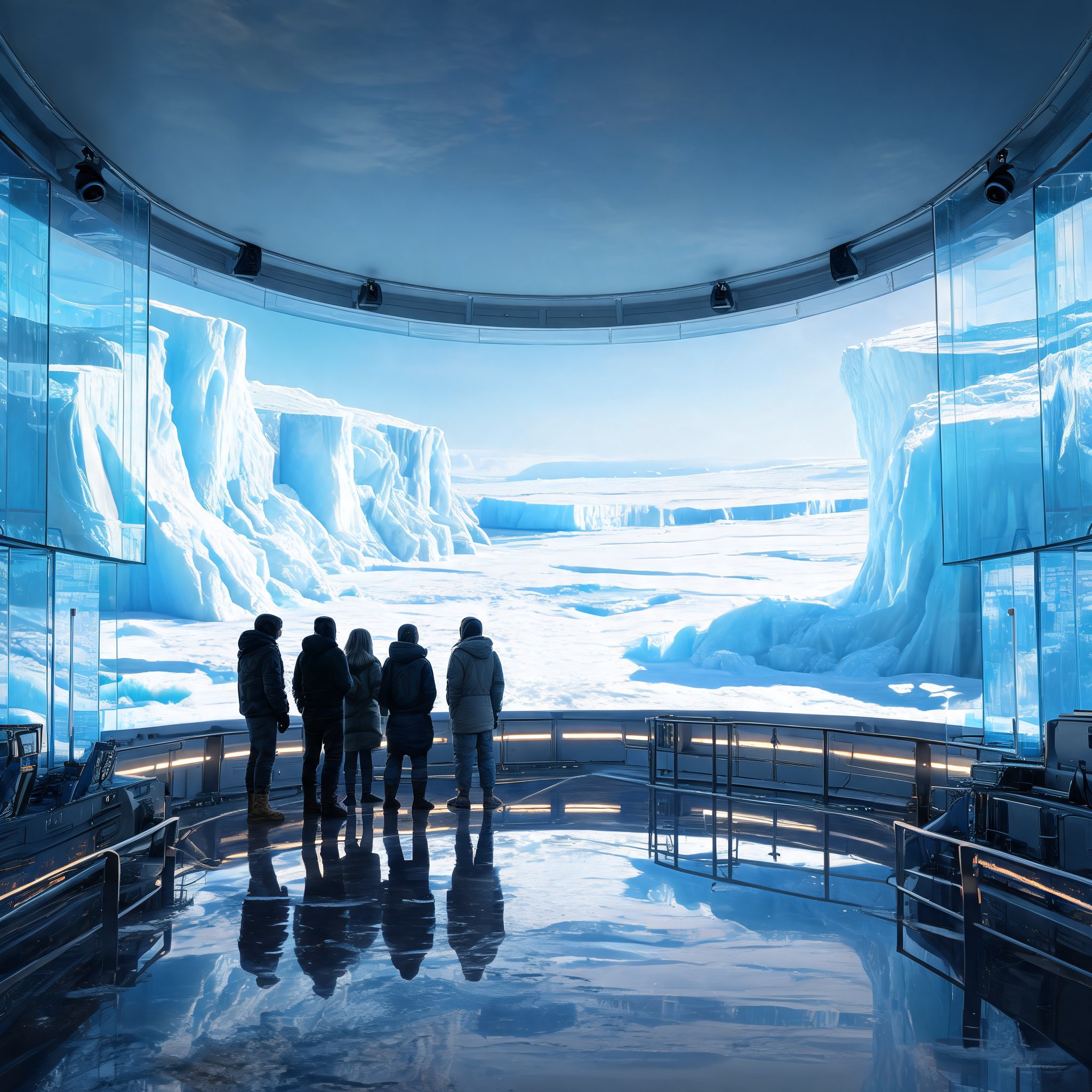
An immersive exhibition devoted to the Arctic and Antarctic is positioning climate communication as an expedition rather than a spectacle. POLAR EXPERIENCE, conceived by Nicole Srock.Stanley and developed by dan pearlman, combines scientific research, cinematic storytelling and multisensory design in a visitor journey designed for families, school groups and general audiences.
The project was developed with the Alfred Wegener Institute, Helmholtz Centre for Polar and Marine Research, and polar researcher Prof. Dr. Markus Rex. According to the project description, scientific accuracy is the foundation of the experience rather than an added content layer. The exhibition translates climate research into stories and environments intended to be accessible to visitors with different levels of prior knowledge.
An expedition-style journey
Visitors begin by boarding a representation of the legendary research vessel Polarstern and are welcomed as expedition members. The route then moves through frozen polar landscapes, spectacular ice formations and presentations of regional wildlife. It also introduces the lives of Indigenous communities and the scientific missions that have shaped understanding of climate change.
The journey culminates in a 360-degree projection environment that combines large-scale visuals, surround sound and choreographed storytelling. The aim is to create an emotional connection with the polar regions while keeping the content grounded in research.
From inspiration to action
POLAR EXPERIENCE deliberately avoids fear-based messaging, the project states. Instead, it seeks to engage visitors through curiosity, wonder and optimism. A final “Act Now” area presents practical opportunities for climate engagement, partnerships and personal contribution. The stated goal is for visitors to leave with both new knowledge and a stronger sense of responsibility and agency.
Accessibility is built into the format. A multilingual audio guide accompanies the full journey, and younger visitors are guided by Cosmo, a character from Galileo Kids. The layered storytelling approach is intended to let each visitor engage at their own level without simplifying the underlying science beyond recognition.
Collaboration and public response
The exhibition’s development brought together scientists, filmmakers, Indigenous representatives, educators, media partners, creative designers and immersive technology specialists. Scientific expertise shaped the project from its earliest stages rather than being applied after the creative concept was complete, according to the project team. That interdisciplinary process was intended to produce an experience that is both emotionally compelling and scientifically trustworthy.
During its world premiere in Berlin, POLAR EXPERIENCE welcomed more than 120,000 visitors within four months, the project reports, and drew acclaim from audiences and media. The exhibition is presented by Galileo and Galileo Kids. Dan pearlman developed the concept and realization, while the Alfred Wegener Institute serves as scientific partner and WWF Germany contributes expertise. Local promoters were FKP Scorpio Entertainment in Oberhausen and Cofo Entertainment in Berlin; Seven.One Starwatch is the media partner, and GLS Bank supports the project as sponsor.
The project also involves contributions from Prof. Dr. Markus Rex and the Alfred Wegener Institute, shaman Yaari Walker and the Yupic people, WWF Germany, and a broader group of creative and media collaborators. Its organizers present the exhibition as a benchmark for immersive media that connects audiences with global challenges without reducing them to statistics alone.